

Pre-Departure Safety Checklist: Fire Protection, LSA & Crew PPE
A practical pre-departure checklist covering fire protection systems, life-saving appliances, and crew PPE to help vessels leave port safely and compliant.
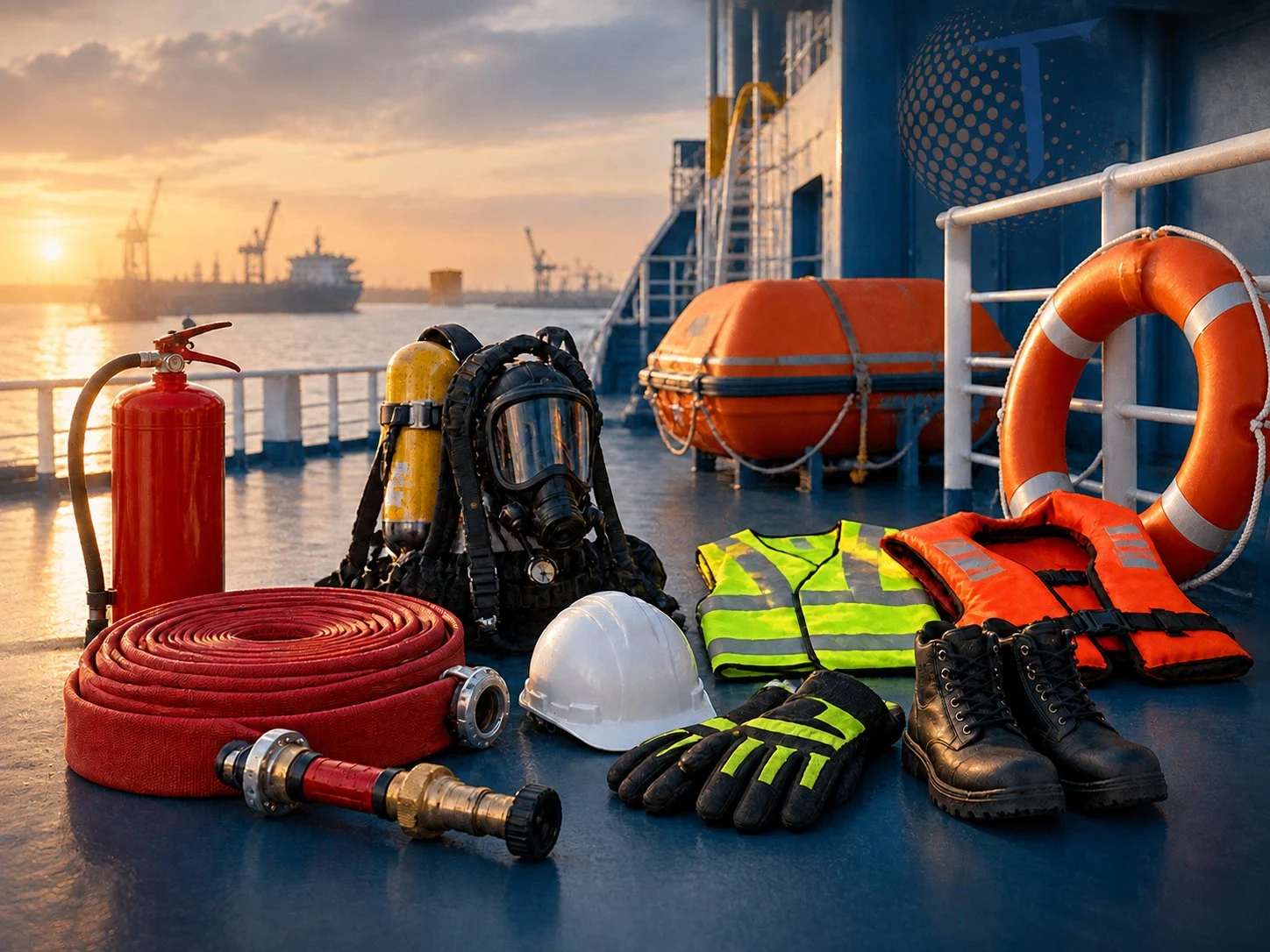
Every voyage begins long before a vessel casts off her lines. The minutes spent walking the decks, checking cabinets, and confirming equipment status before departure are often the difference between a routine passage and a preventable emergency at sea. A structured pre-departure inspection is not just a regulatory box to tick — it is the last line of defense against fire, flooding, and crew injury once the vessel is underway and help may be hours or days away.
This guide walks through a practical, three-part checklist covering fire protection systems, life-saving appliances (LSA), and crew personal protective equipment (PPE). Whether you're a master, chief mate, safety officer, or deckhand assigned to rounds, this checklist can be adapted to vessels of any size — from workboats to commercial cargo ships.
Caption: A thorough deck-by-deck inspection should be completed and logged before every departure.
1. Fire Protection System Checks
Fire remains one of the most serious hazards aboard any vessel, given the confined spaces, fuel sources, and limited escape routes. Before departure, confirm the following:
Fixed and Portable Firefighting Equipment
- Fire extinguishers: Verify correct type, location, and inspection tag date for all portable units. Confirm pressure gauges read in the operable (green) range and pins/seals are intact.
- Fire hoses and hydrants: Check hoses are properly racked, couplings are not corroded, and nozzles are functional. Confirm fire main pressure via a quick test if time allows.
- Fixed suppression systems: For engine rooms or galleys, confirm CO2, foam, or clean-agent systems show normal pressure and that release mechanisms are not obstructed.
- Fire pumps: Test that the emergency fire pump starts and builds pressure, especially if it operates independently from the main power source.
Detection and Alarm Systems
- Confirm smoke and heat detectors are unobstructed and show active status on the panel.
- Test the general alarm and confirm audibility in all crew spaces, including cabins and machinery spaces.
- Verify fire doors and dampers close fully and are not wedged open or blocked by cargo or gear.
Escape Routes and Signage
- Walk all designated escape routes to confirm they are clear of obstructions.
- Check that muster station signage and low-location lighting are intact and visible.
2. Life-Saving Appliances (LSA) Inspection
Life-saving appliances must be ready for immediate use at all times — there is rarely warning before an abandon-ship situation. A pre-departure LSA check should include:
Lifeboats and Liferafts
- Confirm davit mechanisms move freely and hydraulic/winch systems show no leaks.
- Check liferaft hydrostatic release units (HRUs) are within their service date.
- Verify lifeboat engines start and painters are properly secured and not fouled.
- Confirm survival equipment inside rafts/boats (rations, flares, first aid kits) is within expiry and properly stowed.
Personal Flotation Devices
- Count lifejackets against crew and passenger manifest — ensure enough units plus spares are aboard.
- Inspect for tears, mildew, broken straps, or missing whistles/lights.
- Confirm immersion suits, if carried, are complete and sized appropriately for assigned crew.
Emergency Signaling Equipment
- Check EPIRB battery and hydrostatic release expiry dates.
- Confirm SART units and handheld VHF radios are charged and operational.
- Verify pyrotechnic flares are within their valid service life and properly stored in a dry, secure locker.
3. Crew Personal Protective Equipment (PPE)
Beyond fire and abandon-ship equipment, everyday PPE protects the crew during routine operations, cargo handling, and emergency response. A proper pre-departure PPE check includes:
Standard Issue Gear
- Confirm each crew member has a properly fitted hard hat, safety footwear, and high-visibility clothing appropriate to their role.
- Inspect work gloves and eye protection for wear, especially for crew assigned to mooring, engine room, or deck maintenance duties.
- Verify hearing protection is available for crew working in high-noise areas such as engine spaces.
Task-Specific Protective Equipment
- For crew handling chemicals or fuel, confirm chemical-resistant gloves, aprons, and eye/face shields are stocked and accessible.
- Confirm harnesses and fall-arrest systems are inspected and tagged for crew working aloft or over the side.
- Check breathing apparatus (SCBA) cylinders are fully charged and masks are clean and undamaged.
Caption: PPE should be inspected for fit, function, and condition before every voyage — not just during scheduled surveys.
Building a Repeatable Departure Routine
The most effective pre-departure checks are the ones that happen the same way, every time, regardless of who is on watch. Consider these practices to keep your checklist consistent and useful:
- Assign clear responsibility. Designate a specific officer or safety representative to lead and sign off on the inspection before each departure.
- Use a written or digital checklist. Verbal checks are easily forgotten under time pressure — a logged checklist creates accountability and a paper trail for audits or investigations.
- Involve the full crew. Rotating inspection duties among crew members builds familiarity with equipment locations and operation, which pays off in a real emergency.
- Report and correct deficiencies immediately. Any item that fails inspection should be repaired, replaced, or flagged to the master before the vessel departs — not "fixed on the next port call."
- Review after every drill or incident. Update the checklist whenever a drill reveals a gap, a piece of equipment underperforms, or new regulations come into effect.
Final Thoughts
A pre-departure inspection is a small investment of time compared to the cost of a fire, a failed evacuation, or an injured crew member at sea. Fire protection systems, life-saving appliances, and PPE all work together as layers of defense — and each layer needs to be verified, not assumed. Building this checklist into your standard departure routine helps ensure that when something does go wrong, your equipment and your crew are ready to respond.